The EZ-Rise grip, finger by finger
Most rise ball problems are grip problems wearing a disguise.
September 17, 2026 · 4 min read
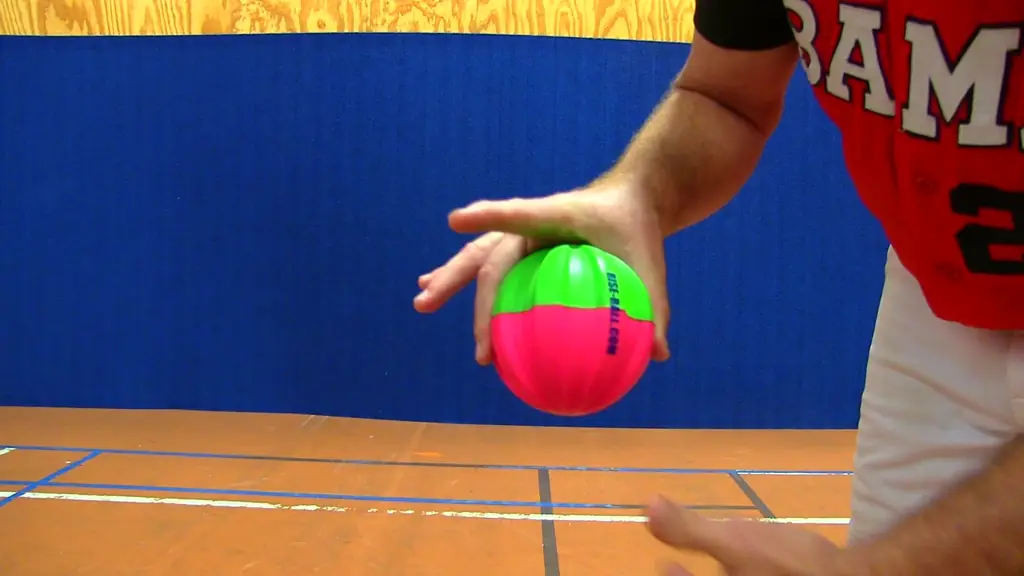
Ask three coaches how to grip a rise ball and you will get the horseshoe grip, the drop ball grip and the rise ball grip described in roughly the same words. They are not the same, and using the wrong one is the most common reason a pitch spins sideways.
Where the fingers go
For the rise ball, the index and middle finger run parallel to the seams, with the middle finger sitting on the seam itself. The thumb and index finger form a C underneath. That C is doing more than it looks like it is doing: it is what lets the hand stay under the ball through the release rather than rolling over the top of it.
On an EZ-Riseball the grip is easier to feel because the surface tells you where to go. The fingers set into the moulded grooves between the wings, and the release is a matter of spinning those wings with the fingers rather than trying to impart spin on a smooth surface.
The grip is a spin machine, not a holding position
This is the reframe that helps most pitchers. A grip is not how you hold the ball. It is the mechanism by which your fingers are going to accelerate it as it leaves. If the fingers are not positioned to do work on the way out, the grip has failed no matter how comfortable it feels.
That is why finger placement in the grooves matters so much on a training ball. The whole design puts a physical edge under the fingertips for them to push against, which increases the rate of spin without the pitcher having to do anything different with her arm.
Telling the three grips apart
- Horseshoe grip: fingers laid across the horseshoe of the seam. A general purpose starting grip, not a movement grip.
- Drop ball grip: set up so the fingers can get up and over the top of the ball at release, with pressure from the index and middle finger on top.
- Rise ball grip: index and middle parallel to the seams, middle finger on the seam, thumb and index in a C, hand staying under the ball.
Notice that the drop and the rise are close to opposites at the point of release. Same arm circle, same stride, and then the fingers do something different in the last few inches. That is genuinely all that separates the two pitches at the level most pitchers are working at.
Common faults you can see from behind
If the ball leaves with sideways spin, the hand has almost certainly rotated during the arm circle rather than at the release. The C collapses, the thumb comes round, and what should have been backspin becomes a lazy sidespin that does nothing.
If the ball comes out with no spin worth speaking of, the fingers are passengers. She is throwing the ball with her arm and the hand is just letting go. This one is very common and it is invisible from the front, because the pitch can still look fast.
If the spin looks correct but wobbles, the middle finger is probably off the seam. Seam contact is what makes the rotation stable enough to be four seam rather than something approximate.
Ten minutes, close range
Grip work does not need a full bullpen. Stand ten or twelve feet from a wall and throw at maybe half effort, watching only what the ball does in the first few feet. At that range you are not testing the pitch, you are testing the release, and a bad grip shows up immediately.
Do that for ten minutes before anything else in a session. The grip is the cheapest thing to fix and it changes every pitch downstream of it.
Why a moulded surface changes the lesson
A smooth softball asks the fingers to generate spin through friction alone. That works once the hand is strong enough and the technique is grooved, which is to say it works for pitchers who have already learned the thing you are trying to teach. Until then the fingers slip, the spin is inconsistent, and the pitcher cannot tell whether a given throw failed because of her grip or because the ball got away.
Grooves remove that variable. The fingers have an edge to push against, so the same hand action produces the same spin every time, and a bad throw is now genuinely information rather than noise. The grip designed around this is simple to state: set the fingers into the grooves and spin the wings with the fingers on the release.
That also explains why grip work transfers back to a regulation ball rather than becoming a party trick. What is being trained is the finger action, not a dependence on the surface. The surface only makes the action legible while it is being learned.
One thing at a time
Resist changing grip and release in the same session. If both change and the pitch improves, you do not know which one did it, and if it gets worse you have two things to undo. Give a grip change a full week of short sessions before touching anything else.
EZ-Riseball, (334) 531-4739
Call (334) 531-4739