Without a coach
Teaching yourself the rise ball
A coach's main job at this stage is telling a pitcher what the ball just did. A ball that lifts at 30 mph does that on every throw.
Chapter 01
What the company claims
EZ-Riseball's own position is stated plainly on its site: that a pitcher will learn more in 30 minutes with the ball than in all her past lessons, and that she will not need expensive pitching lessons after that.
That is their claim rather than ours, and it is worth reading the sensible version of it. A lesson is an hour a week. What happens in the other six days decides most of what a pitcher becomes, and that is the gap this is aimed at.
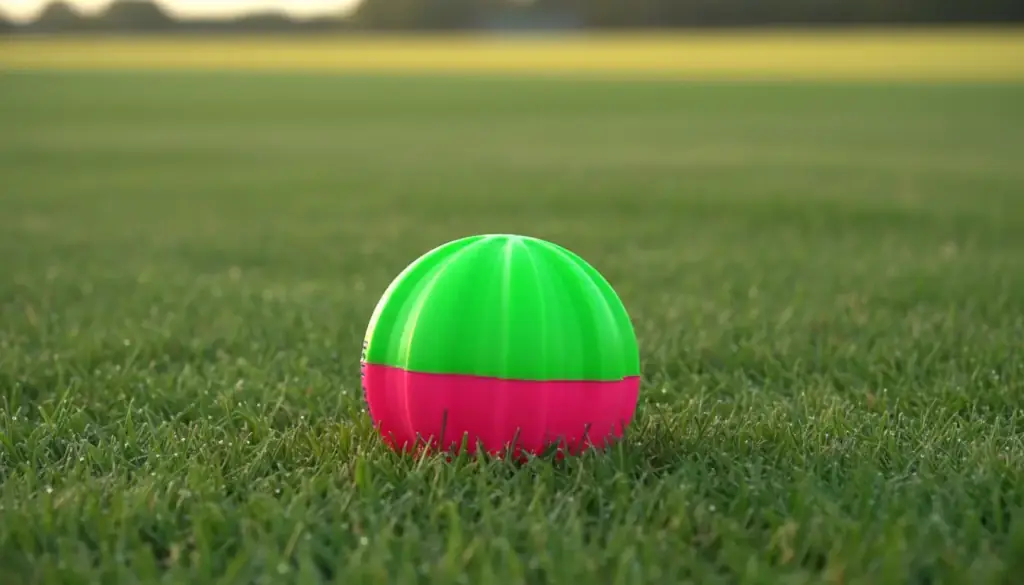
An EZ-Riseball resting in cut grass at first light
Why feedback substitutes for a coach here
Strip a pitching lesson back at this stage and a large part of what the coach provides is observation: watching the ball leave and telling the pitcher what it did, because she cannot see it from where she is standing.
A ball that lifts at 30 mph provides that same information on every throw, immediately, without a second person. Good backspin and it climbs. Sideways spin and it does not. That is the loop a coach was closing, and it is the loop that makes solo practice worth doing at all.
This is also why practising with a regular softball can be actively unhelpful early on. At the speeds a developing pitcher throws, a regulation ball cannot confirm a good release, so correct and incorrect throws produce the same flat result and she learns nothing from either.
Chapter 03
What solo work genuinely cannot do
It is worth being straight about the limits. A wall will not teach location, it will not teach holding runners, and it will not tell a pitcher anything about what her mechanics do with a batter in the box and a count against her. Those need a catcher and eventually a game.
What solo work does own is the part that is pure repetition of a small motion: the grip, the finger action, the release. That is the part that most needs volume, and the part that is most expensive to buy by the hour.
Twenty minutes, three times a week
Grip flips at arm's length, then close range at half effort, then a short stride, then a few alternating rise and drop. Stop at twenty minutes.
Write down two numbers afterwards: how many throws, and roughly how many did what she wanted. Over a month, that second number climbing is the clearest evidence anyone will get that the work is doing something, and it is what keeps a training habit alive when the week to week change is too small to feel.
EZ-Riseball, US Patent 9,750,986. Call (334) 531-4739.