For a pitcher starting out
Starting from scratch
A brick wall and one light ball. The whole beginner problem is that a regular softball cannot confirm a good throw at the speeds a beginner throws.
Chapter 01
All you need is a brick wall and an EZ-Riseball
That is the site's own claim and it is worth taking literally, because it removes the two things that usually stop a beginner practising: another person, and somewhere to go.
A wall returns the ball, which means more repetitions per minute than a net and far less walking. At close range it also puts the flight of the ball where the eye can actually read it, in the first few feet after release, which is exactly where spin is visible and exactly where most pitchers never look.
Close range feels wrong because a game is not played at twelve feet. But a beginner is not practising a pitch yet, she is practising a release, and a release is best watched from close up.
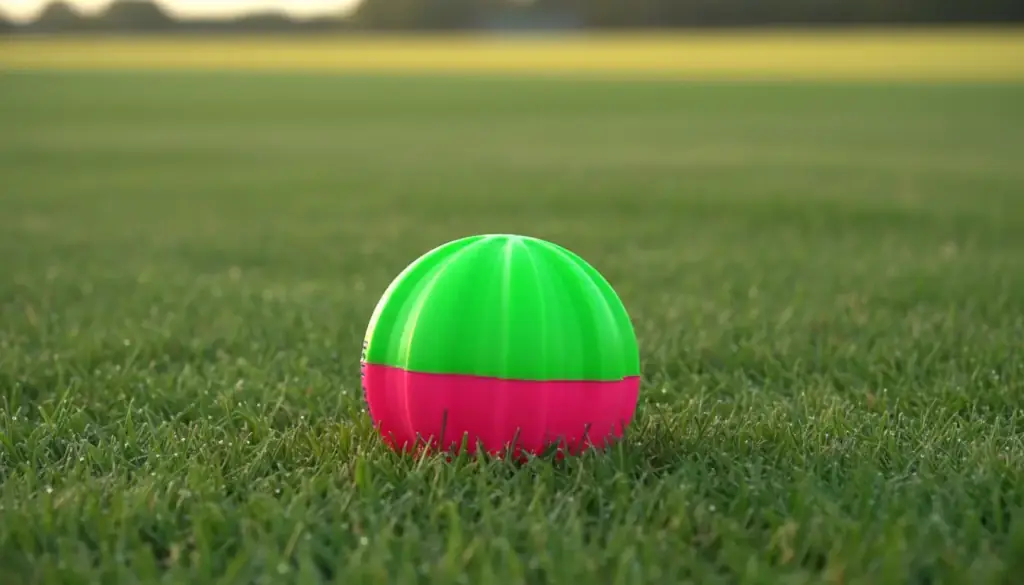
An EZ-Riseball resting in cut outfield grass in low morning light
Why the light ball first
The Beginner Ball is 3 oz, roughly half the weight of a regulation softball, and it is built to lift with backspin at around 30 mph. That number is the whole design brief: it is set at a speed a young pitcher can already throw.
Weight matters for a second reason. A lighter ball lets the fingers do a larger share of the work relative to the arm, which is the proportion you want while the finger action is being learned. Strength can come later; the pattern is what is being built now.
The heavier Advance Ball is 8 oz and close to regulation weight, which is the right tool for studying how a pitch moves. It is the wrong tool for a pitcher who has not yet produced clean backspin once.
Chapter 03
Seeing it is the lesson
The reason beginners stall is not effort, it is silence. When a pitch does nothing, there is no way to tell which part went wrong, so the pitcher has nothing to adjust and defaults to whatever feels easiest.
A ball that lifts at 30 mph answers the question on every single throw. Good backspin and it climbs. Sideways spin and it does not. Slow spin and it does not. That turns twenty minutes of throwing into twenty minutes of learning, which is a different activity entirely.
What progress honestly looks like
Consistency arrives before movement, and it is the thing to celebrate. A pitcher who can produce the same release twice in a row has something real to build on. A pitcher whose best throw of the session was an accident has not built anything yet, however good that one throw looked.
So count repeatability rather than height. One good rise in ten becoming four in ten is genuine progress even though nothing about it looks dramatic on any given throw.
EZ-Riseball, US Patent 9,750,986. Call (334) 531-4739.