The other movement pitch
Throwing the drop ball
Same approach, same stride, opposite finish. The hand ends above the ball instead of under it, and that is most of the difference between the two pitches.
Chapter 01
Wrist back
The first condition for a drop ball is that the wrist stays back as the hand approaches the release. Not cocked hard, just not opened early, with the inside of the wrist pointing toward the catcher as the hand comes through.
When the wrist opens early the hand runs out of range before it can do anything useful to the ball, and the result is a flat pitch that happens to be aimed low. Low is not dropping. A drop ball earns the name by breaking downward late, after the batter has committed.
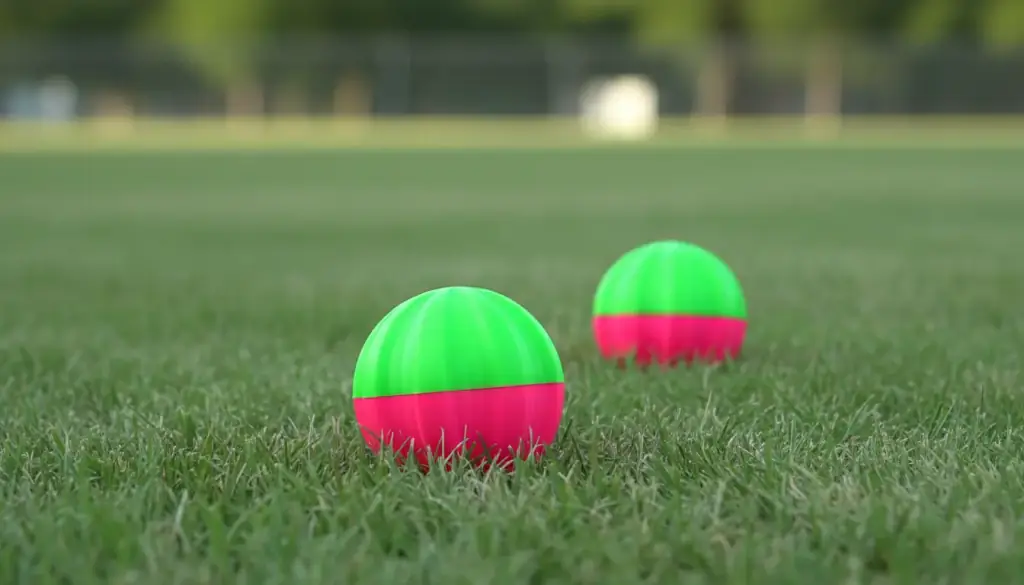
Two EZ-Riseballs resting side by side in cut grass
Elbow close to the body
The elbow stays in through the release. When it drifts away the arm compensates somewhere else, and the compensation nearly always appears as the hand rotating sideways.
This one is easy for a parent to spot from the side and hard for a pitcher to feel. If daylight opens up between the elbow and the ribs at the release, that is the next thing to work on, before anything to do with the fingers.
Chapter 03
Fingers up and over
The last piece is the fingers getting up and over the ball, with the pressure coming from the index and middle finger on top. That pressure is what applies topspin, and topspin is what makes the ball dive rather than sink.
Set that against the rise ball, where the hand stays under the ball and the fingers work behind it. Identical arm circle, identical stride, and then the hand finishes either above or below. Framed that way the second pitch is a modification rather than a new project.
What the pitch is for
A drop ball is not a low fastball, and knowing that changes how it should be thrown. Its job is to look like a strike for most of its flight and then leave the zone downward late, so the bat arrives where the ball used to be.
Which means a drop ball that starts low is wasted. It has to start in the zone. A pitcher who aims low is usually compensating for a pitch that does not really break, and the repair is in the release rather than the target.
The EZ-Riseball is built as the all in one ball for rise and drop training, so the same tool reports back on either release rather than needing two.
EZ-Riseball, US Patent 9,750,986. Call (334) 531-4739.