A brick wall, twenty minutes and no coach
Solo practice works if the ball is telling you something. Here is how to set it up.
September 17, 2026 · 3 min read
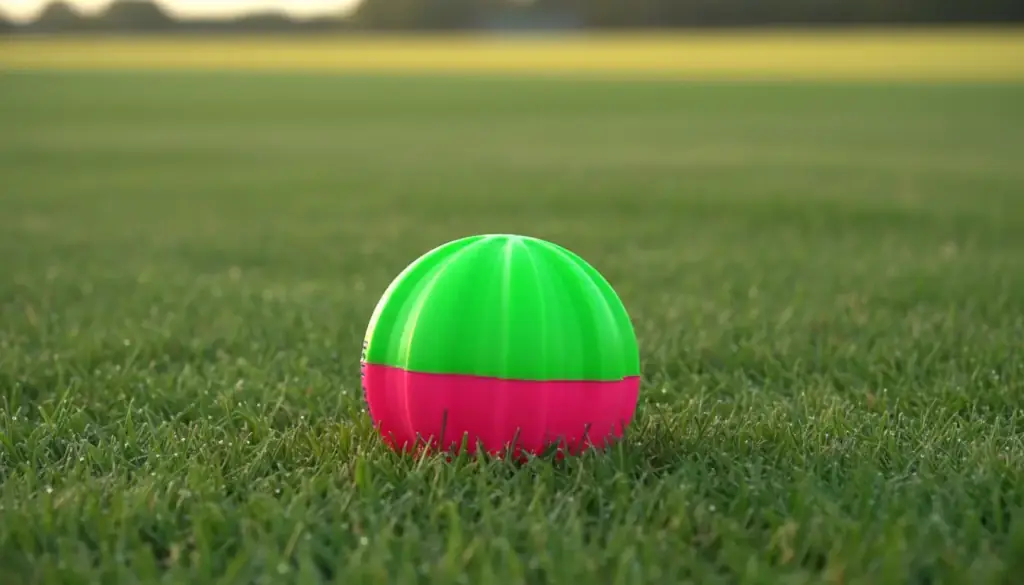
Pitching lessons are expensive, they happen once a week, and most of the actual learning has to happen in between. The good news is that spin work is one of the few parts of pitching that genuinely does not need another person present. All you need is a brick wall and a ball that shows you what happened.
Why a wall beats a net
A net absorbs the ball and tells you nothing. A wall gives you the ball back, which means more repetitions per minute and less walking. At close range it also lets you watch the flight in the first few feet, which is where spin is most visible.
Close is the key word. Most solo practice is done at full distance because that is what a game looks like, but full distance is the worst place to learn a release. The ball is furthest from your eyes exactly when you most need to see it.
Structure beats volume
Twenty minutes with a plan will do more than an hour of throwing. Here is a structure that works for most pitchers.
- Four minutes of grip and wrist flips at arm's length. No stride, no arm circle. You are only asking the fingers to spin the ball.
- Six minutes at ten to twelve feet, half effort. Watch the spin, not the target.
- Six minutes at a short stride, full release, still close to the wall.
- Four minutes alternating rise and drop, five of each, so the hand feels the contrast.
Stop at twenty minutes even if it is going well. Spin work is finger and wrist work, and those tire quietly. The first sign of fatigue is usually a release that quietly gets earlier, which teaches the wrong habit.
Feedback is the whole thing
Solo practice fails when there is no way to tell good from bad. If every throw looks the same, a pitcher will default to the version that feels easiest, which is usually the one with the least finger work in it.
This is the real argument for a training ball rather than a regular softball at this stage. A regular softball will not lift at the speeds a young pitcher throws, so it cannot confirm a good release. A ball that lifts at 30 mph can, and confirmation on every throw is what turns practice into learning.
What to watch for as a parent
You do not need to know pitching mechanics to be useful here. Stand behind and slightly to the side, and watch the ball rather than your daughter. Three things are visible to anybody.
- Is the ball spinning backwards, or is it turning sideways or wobbling?
- Does the spin look fast, or is the ball mostly just travelling?
- Does the ball do the same thing twice in a row?
That third one is the most useful and the most overlooked. Consistency is the goal at this stage, not movement. A pitcher who can produce the same release twice has something to build on. A pitcher whose best throw was an accident has nothing yet.
Keeping it going
Three sessions of twenty minutes in a week will beat one long session, and it is easier to protect twenty minutes than an hour. Put it somewhere it does not compete with anything, before dinner or straight after school, and let the ball do the coaching.
What solo practice cannot do
It is worth being honest about the limits. A wall will not tell you anything about pitch location, about holding runners, or about what happens to the mechanics under pressure with a batter standing there. Those need a catcher and eventually a game.
What solo work does own is the part of pitching that is pure repetition of a small motion: the grip, the finger action, the release. That happens to be the part that most needs volume and is most expensive to buy by the hour.
Keeping a record
Write down two numbers after each session. How many throws, and roughly how many of them did what you wanted. That is it. Over a month the second number climbing is the clearest evidence you will get that any of this is working, and it protects against the feeling that nothing is changing, which is what usually ends a training habit.
Progress here is not dramatic week to week. It is a pitcher who used to get one good rise in ten getting four, and then seven, and then being able to call it. Recording it is what makes that visible.
EZ-Riseball, (334) 531-4739
Call (334) 531-4739